01 / 06
EmbedOne line on your site.
Copy the script tag, allow the domain, done: no npm package, no build step, no change to your code.
Script tagAny platformTwo minutes

Five channels, one person, tickets by hand.
Feedbapp collects feedback directly in your application, whether website, web app or software: with a screenshot, the clicked element and the technical details. From this context, the AI classifies every report and groups matching topics. In about five seconds.
Closed beta. We open it up in small groups, you will hear from us within two weeks. No spam.
Straight from the product. Sorted automatically.
“Something is broken.”
No page, no screenshot, no console message. You write back and ask. Two days later you know what it was about, if anyone even answers at all.
Five reports, one problem, four channels.
The same issue by email, in Slack, in the support chat and out loud in a meeting. You only notice it is the same thing once you have read all five.
After 200 entries you have a list, not a picture.
What comes up often looks like whatever came up last.
An AI can only classify as well as what it receives. Tools that pull feedback from tickets and forms see text. Feedbapp sees the screenshot, the clicked element, the console and the failed requests.
What others see
“The export doesn't work”
What Feedbapp sees
Type Error · Topic “CSV export fails (3)”
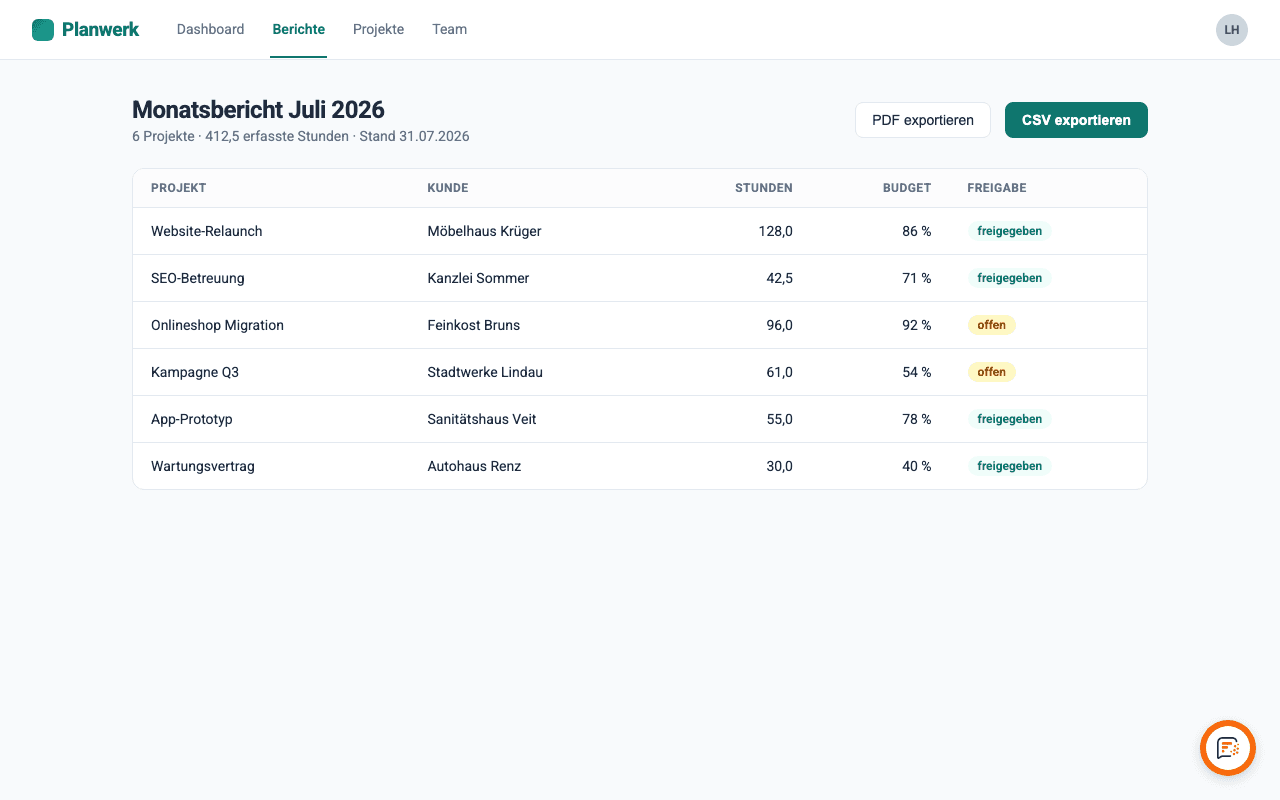
Copy the script tag, allow the domain, done: no npm package, no build step, no change to your code.
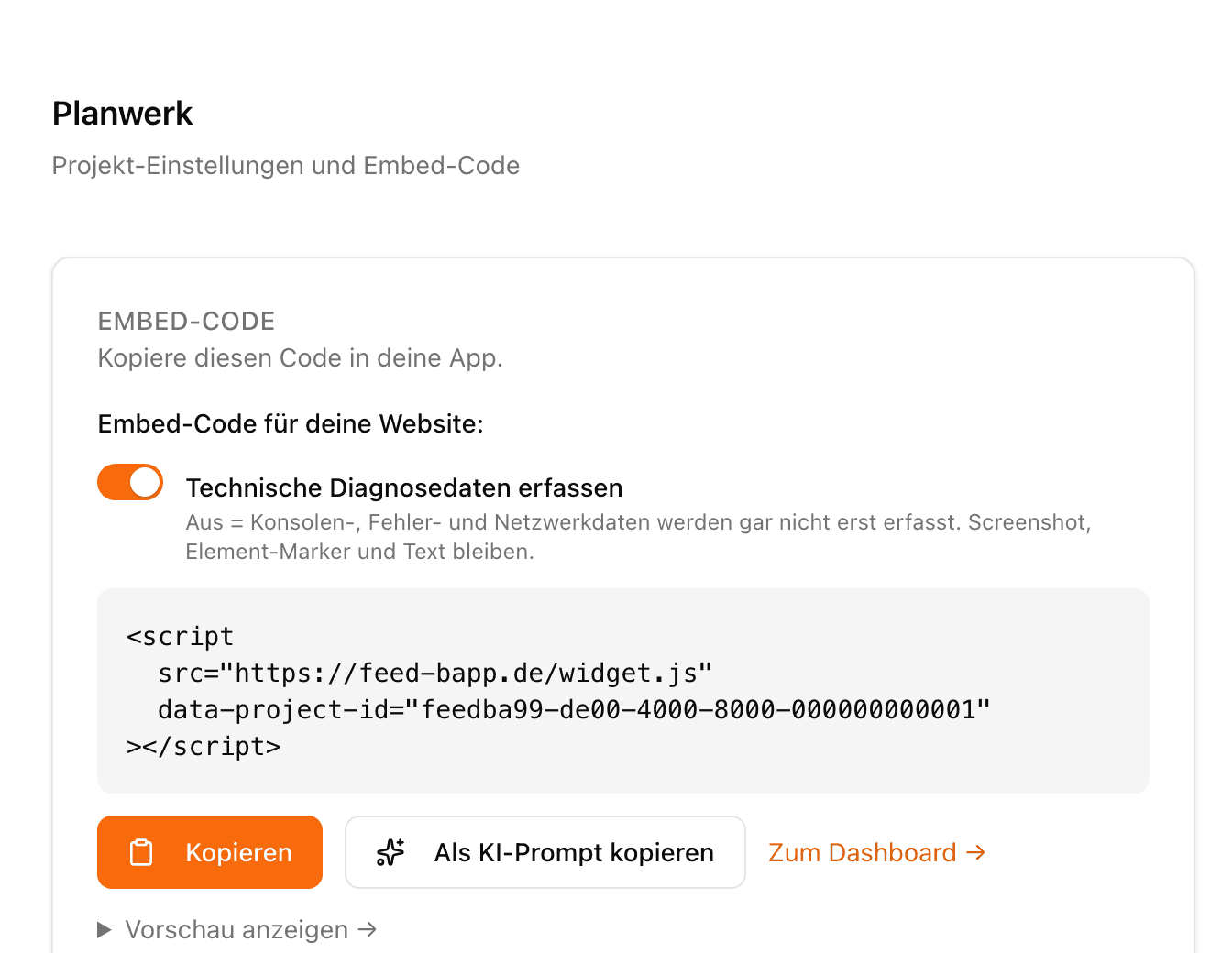
Button bottom right, four categories, one sentence: no account, no login, no extension to install.
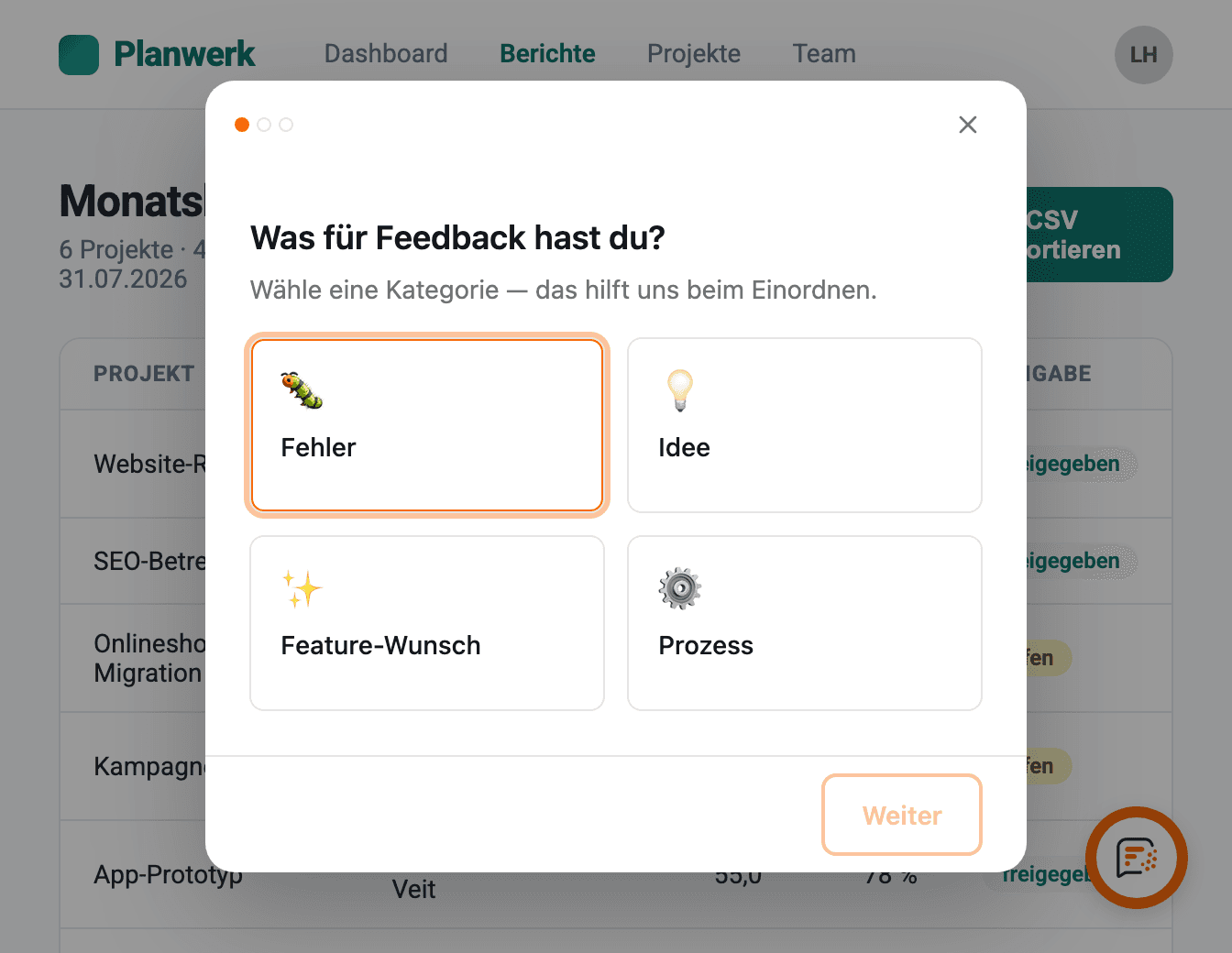
Screenshot, the exact element clicked, console messages and failed requests, sent automatically, known tokens and keys redacted first.
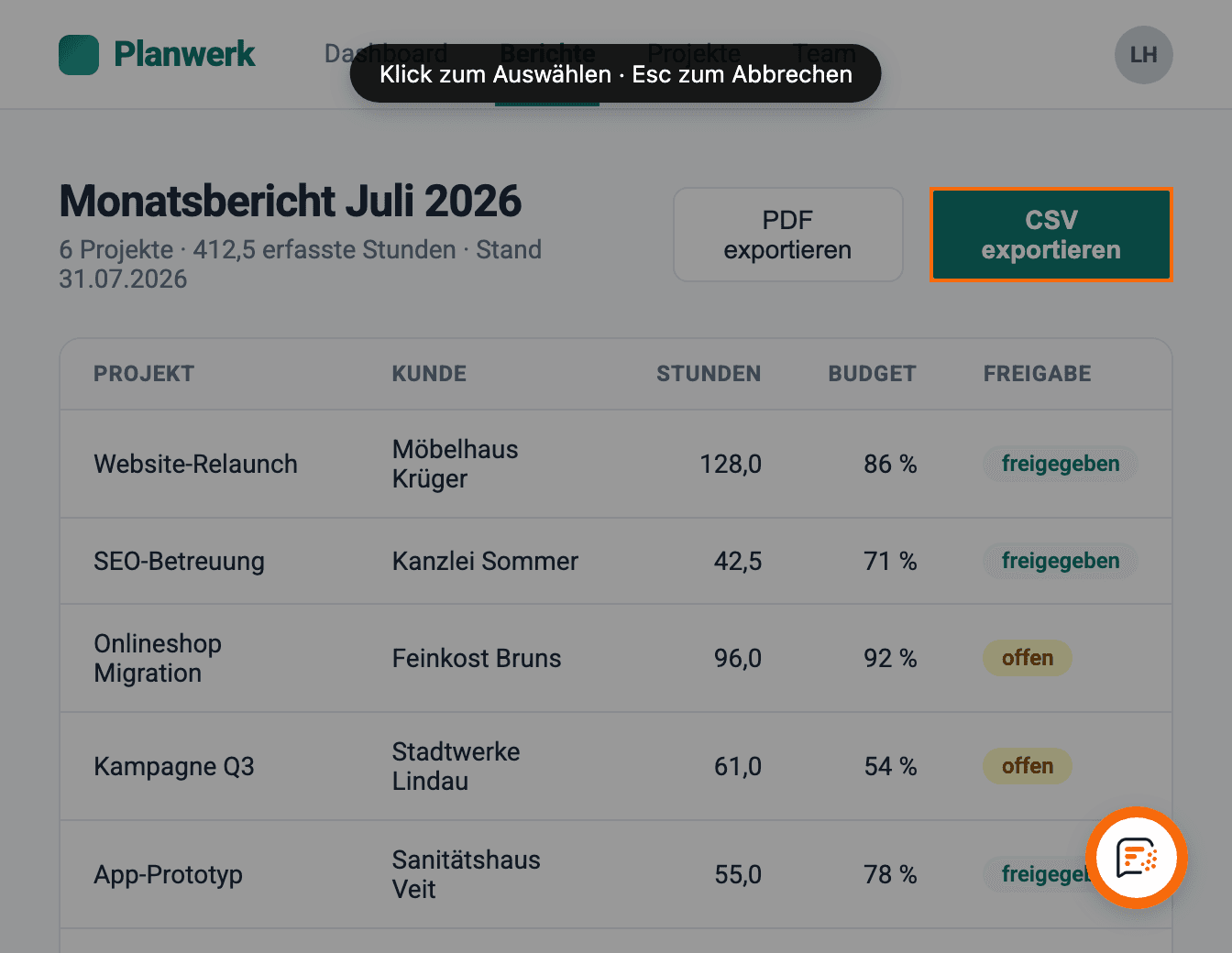
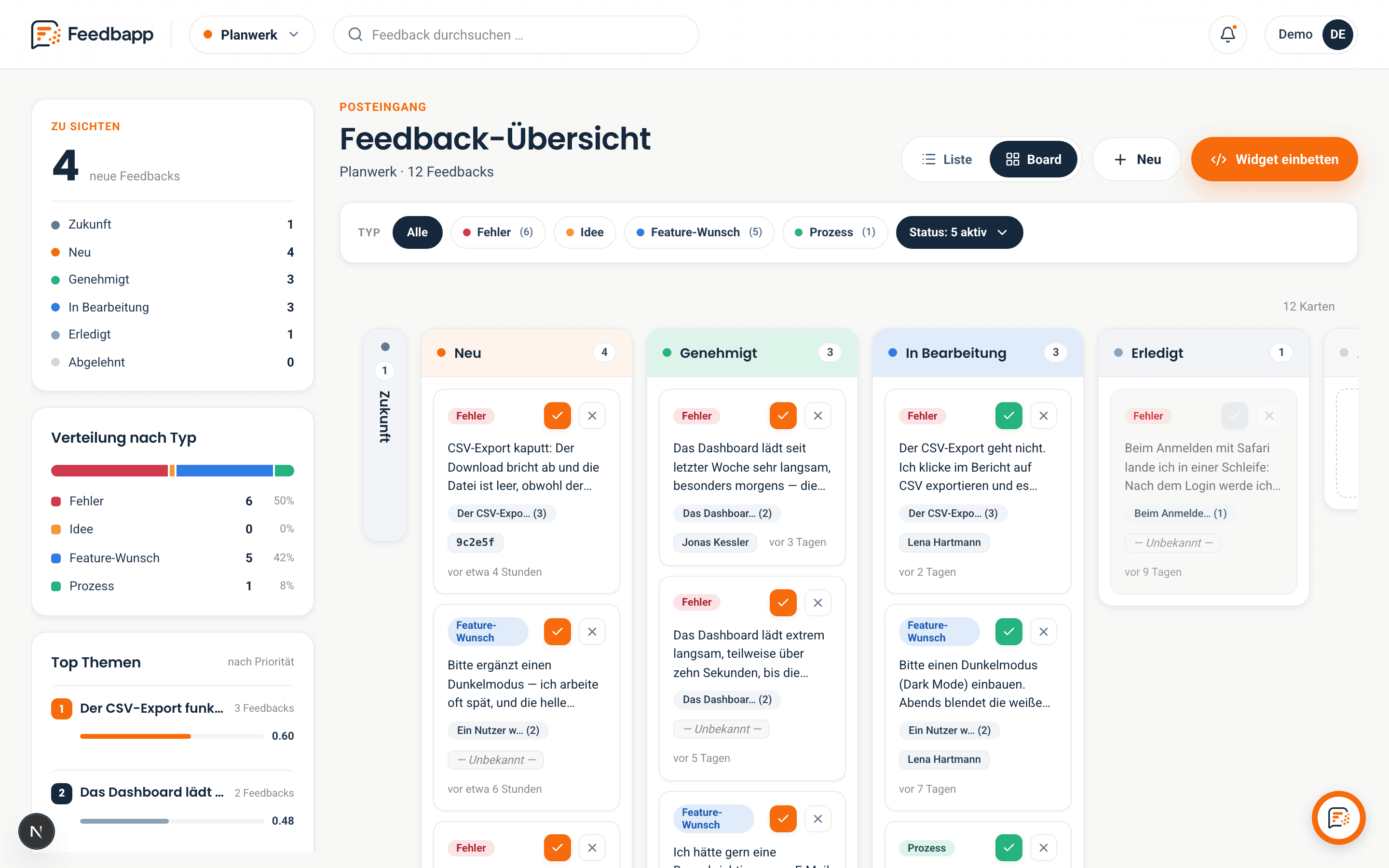
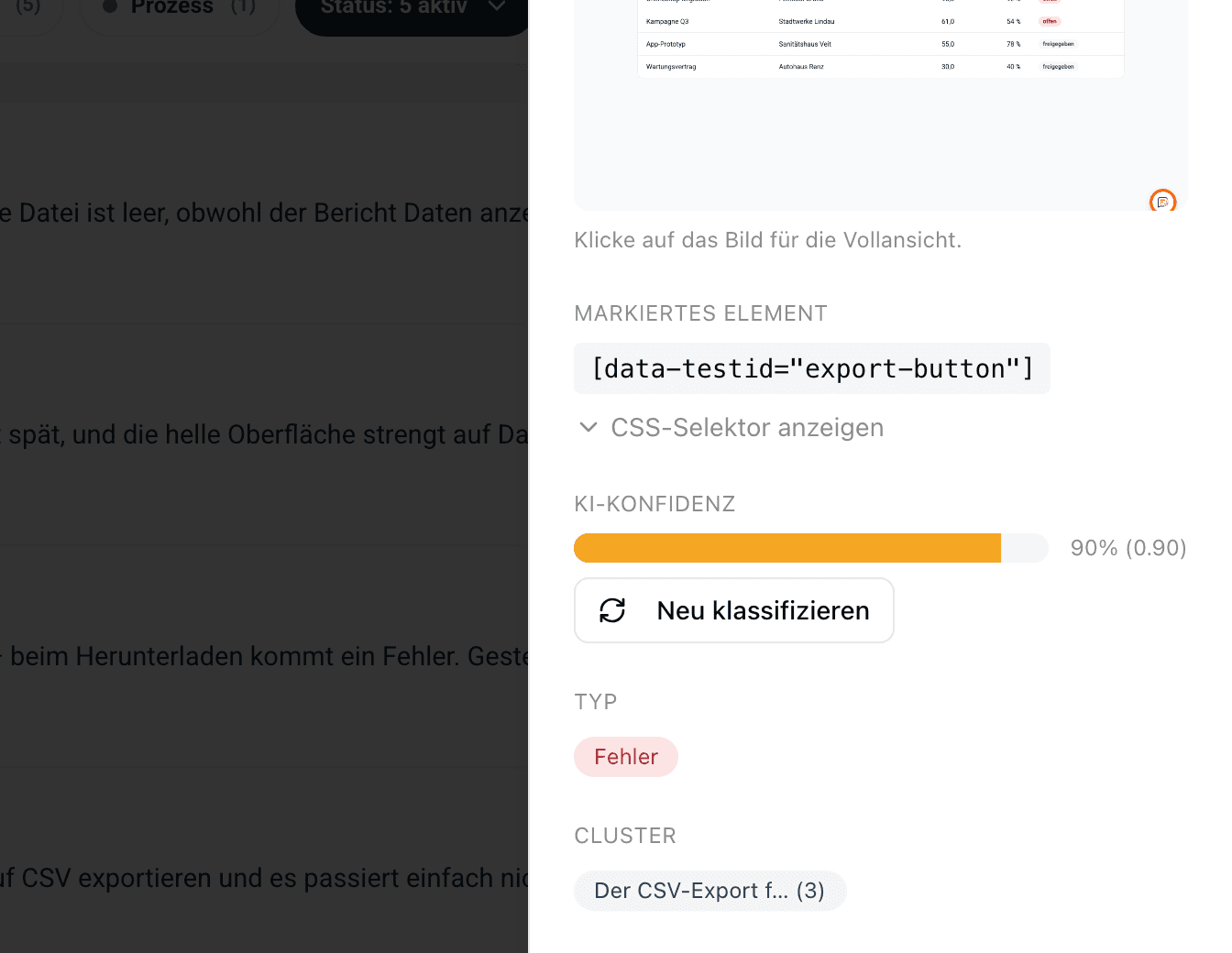
Type, summary and assignment to an existing topic, in about five seconds, without anyone tagging it.
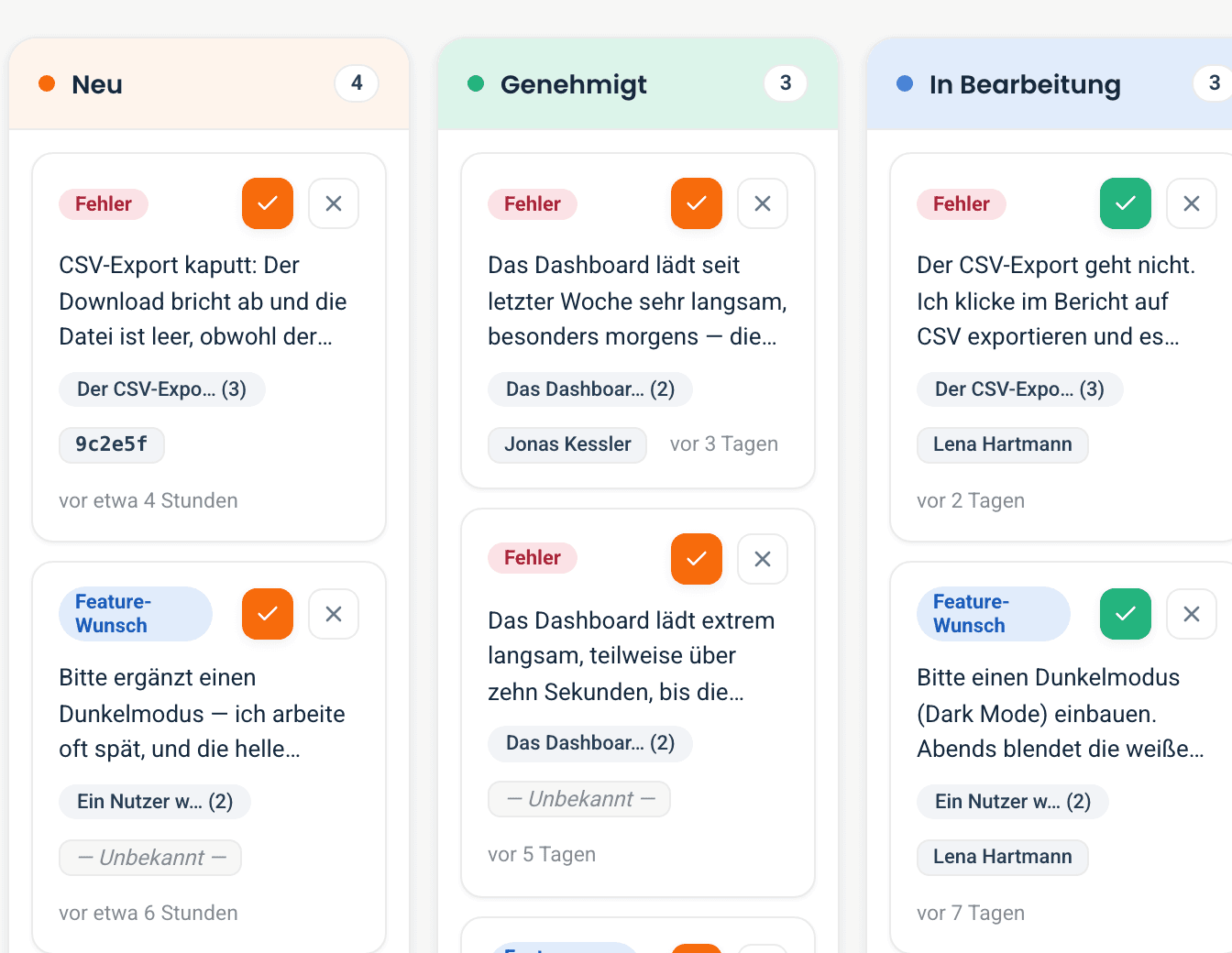
Six columns from “Future” to “Done”, topics sorted by weight: you drag the card, the AI only pre-sorted it.
Claude Code or Cursor fetch the open topics, work through them and reset the status, in a loop, without you sitting in between.
$ npx -y -p feedbapp-cli@latest feedbapp-mcp setupQA
Testers report straight from the interface: screenshot, element and page are already attached, no ticket typed by hand. The AI sorts it by type and topic.
Dogfooding
Your own team uses the product and reports from inside the application. That is how Feedbapp itself runs.
Staging and internal
The widget can be embedded on a staging or internal address. The origin is allowed per project, in the project settings. With no entry, every origin is allowed.
One command, then Claude Code knows your topics.
$ npx -y -p feedbapp-cli@latest feedbapp-mcp setupIn the loop: Because the agent can also set the status, the loop runs by itself: it picks the next topic, builds it, marks it done and moves on. Your product keeps moving while you work on something else. You review instead of coordinating.
Six tools. Claude Code, Cursor and Codex. On every plan, including Free. → Docs
data-diagnostics="off".Three months free, then Pro for 24.5 € instead of 49 €, for as long as you stay. The trade behind it: you use a young product and tell us what doesn't work. In return you never pay full price again.
Your spot locks in once Feedbapp is actually running for you: 50 feedback items collected in the first three months, 10 of them worked. Anyone who hasn't started by then frees up their spot for someone who does.
Free 0 € · Starter 19 € · Pro 49 €, per workspace, not per seat. → All details
Closed beta, we open it up in groups. You will hear from us within two weeks.
Free, Starter 19 €, Pro 49 € per month and workspace. The first 100 keep half off, permanently.
No. No sign-up, no extension. Name and email are optional.
Text, screenshot, clicked element, recent console messages, failed requests, page URL, browser and window size. → Privacy
Text and project description go to OpenAI (US), not for training. Screenshots never.
Yes, with one attribute on the script tag: data-diagnostics="off". Console, errors and network are then never captured; text, screenshot and element marker stay.
One script tag on any page that serves HTML. Snippets for HTML, Next.js, WordPress, Webflow. It also works inside app shells with a WebView (Capacitor, Cordova, React Native WebView).
Not yet. The widget is JavaScript and needs a web page; a native SDK is on the roadmap. If your app has a WebView portion, you can embed it there today.
Yes, one paragraph. You stay the controller for your users' data, we process it on your behalf. We give you the ready-made policy text and the DPA, both in the project settings.
Database and backend in Frankfurt. DPA available on request, on every plan.
All three. The setup assistant writes the configuration itself: for Codex in ~/.codex/config.toml, for the others as JSON.
The first 100 keep half off, permanently.
We build Feedbapp with Feedbapp.